
Powered By



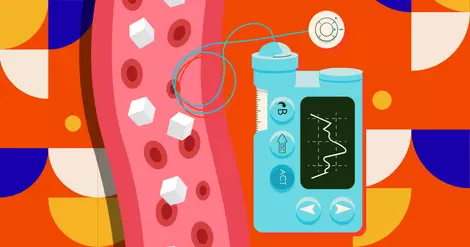
Living with type 1 diabetes means checking your blood sugar often to help prevent dangerous highs and lows. Devices like a continuous glucose monitor (CGM) can make this easier by tracking glucose levels around the clock. This article covers important facts about CGMs, including how they work, their benefits, and how to decide if one might be right for you.
A continuous glucose monitor is a small wearable device that measures glucose, or sugar, in your interstitial fluid — the fluid around your body’s cells. A CGM works constantly, tracking glucose levels day and night. This is different from a finger-stick blood glucose test, which shows your glucose level only at one point in time.
A CGM has three main parts:
Some CGMs can also connect to smartphone apps or insulin pumps.
CGMs may offer different features, but most work similarly. You’ll typically use an applicator to insert the sensor into your skin and keep it in place with adhesive tape. In some models, the sensor comes attached to the transmitter, whereas others require charging the transmitter before connecting it to the sensor.

Once the CGM is in place, some sensors need time to warm up to produce accurate glucose readings. This can take from 30 minutes to a couple of hours. After warming up, the CGM begins collecting glucose data automatically and sends the data to a receiver. Some devices may have you do a finger-stick blood glucose test to calibrate your CGM the first time you use it.
A CGM measures glucose levels every couple of minutes, giving a constant picture of glucose trends over time. Depending on the device, you may be able to set notifications or alerts if your glucose levels are out of your suggested target range.
CGMs can offer several important benefits, such as:
More research is needed, but CGMs may also prevent diabetes complications by helping you keep your glucose levels within your personal range more often. This is called time in range, and spending more time in your target range is linked to better diabetes management.
Even with a number of benefits, CGMs can have some downsides. CGMs measure the glucose in interstitial fluid, but glucose enters your bloodstream before moving into this fluid. There could be a delay or lag between blood glucose and interstitial fluid levels, so CGM readings may differ slightly from a finger-stick blood glucose test.
Sometimes, medications such as acetaminophen can affect CGM readings and make them less accurate. If you’re concerned that a medication may affect glucose readings, talk with your doctor. Never start or stop any treatments without first checking with your healthcare provider.
The adhesive at the insertion site may cause skin irritation or allergic reactions in some people. CGMs can also be expensive, depending on your health insurance plan. In addition, the frequent alerts, especially at night, could feel overwhelming.
CGMs may be especially helpful for certain people, including:
CGMs may also be prescribed for people with prediabetes and obesity, because these conditions affect glucose levels. The devices may also be recommended for other conditions that cause episodes of low blood sugar, such as glycogen storage diseases or insulinoma.
CGMs can support everyday diabetes management in several ways. For example, you can:
A CGM that connects directly to an insulin pump is sometimes called a hybrid closed-loop or an automated insulin delivery system. As the CGM reads glucose levels, the insulin pump can automatically adjust insulin delivery to keep glucose levels in range. Insulin pumps give small, steady doses of basal insulin that change throughout the day.
Some connected systems can lower or pause basal insulin delivery when glucose levels drop and restart when levels rise. Others can calculate correction boluses, or extra insulin doses, to help correct high blood sugar around meals.
While diabetes technology continues to evolve, automated insulin delivery systems may offer real-time insulin adjustments and improved glucose control for some people.
Continuous glucose monitors have helped improve diabetes management and care for many people. CGM devices provide a steady stream of glucose data, help prevent dangerous highs and lows, and can simplify daily diabetes management. When paired with insulin pumps, some CGMs can help automate insulin delivery.
If you’re managing diabetes or supporting someone who is, it may be worthwhile to explore CGMs with your healthcare team. Your doctor can help you decide if a CGM fits your needs and works with your current treatment plan.
On myT1Dteam, people share their experiences with type 1 diabetes, get advice, and find support from others who understand.
How has using a continuous glucose monitor changed your diabetes management plan? Let others know in the comments below.
Get updates directly to your inbox.




 Continue with Facebook
Continue with Email
Continue with Facebook
Continue with Email
Continue with Facebook
Continue with Email
Continue with Facebook
Continue with Email
Become a member to get even more





 Join
Join


 Your Privacy Choices

This is a member-feature!
Sign up for free to view article comments.
Why do I have to pay to get this information? I donate to T1D every year and tell my friends
We'd love to hear from you! Please share your name and email to post and read comments.
You'll also get the latest articles directly to your inbox.